- Out-of-Stock
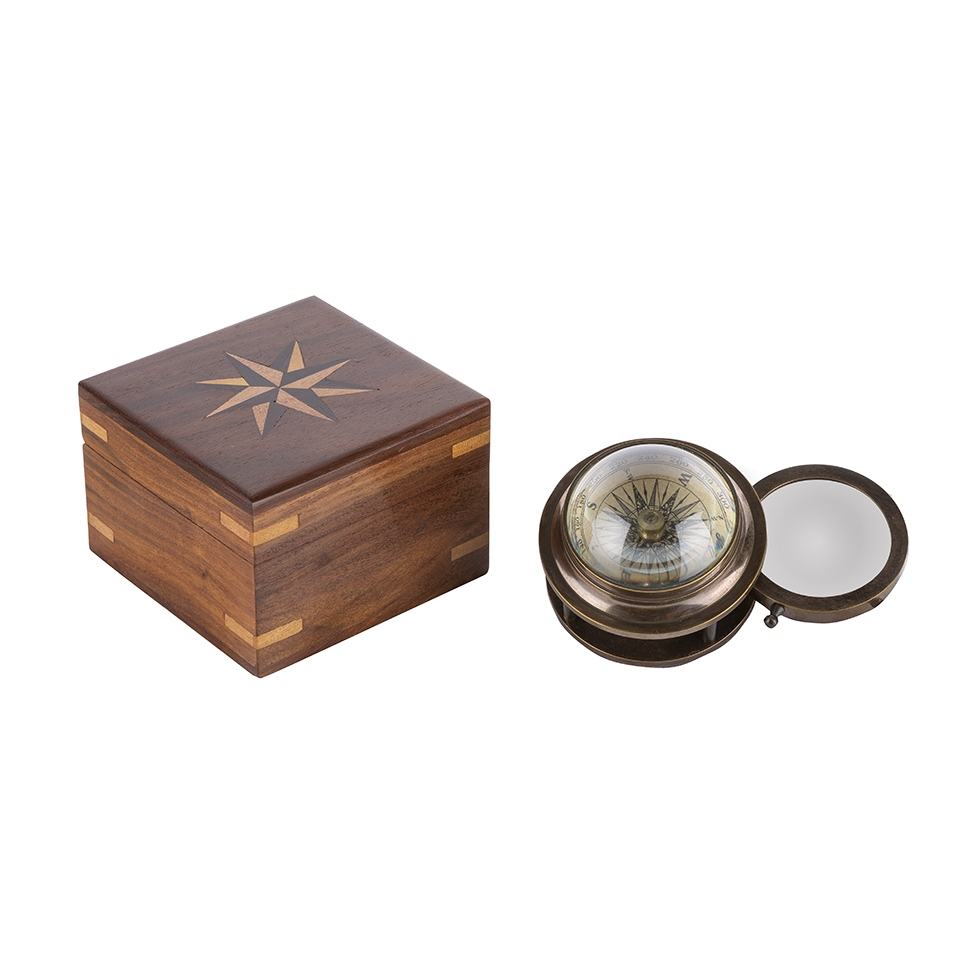
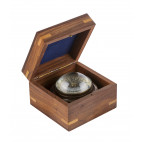
Old brass compass with glass magnifier and rotating lid to protect the glass. It includes an attractive sheesham wood box.
The compass (from the Latin "passus" ("step")) opened up the world to exploration and discovery. The principle of the magnetic needle was already known to the Chinese in the 3rd century BC and was first used by feng shui priests to tell them where and how to build. It was adapted to maritime navigation by Chinese sailors around the year 1000. The first compasses comprised a magnetic needle floating in a bowl of water, with the needle suspended on a thread or threaded through a reed. The Arabs perfected this by mounting the needle on a pivot. The compass arrived in Europe between the 10th and 11th centuries, enabling sailers to cross the oceans and explorers to discover the continents. The first instrument to resemble the modern compass is attributed to Portuguese citizen Ferrande (1483).
Old brass compass with glass magnifier and rotating lid to protect the glass. It includes an attractive sheesham wood box.
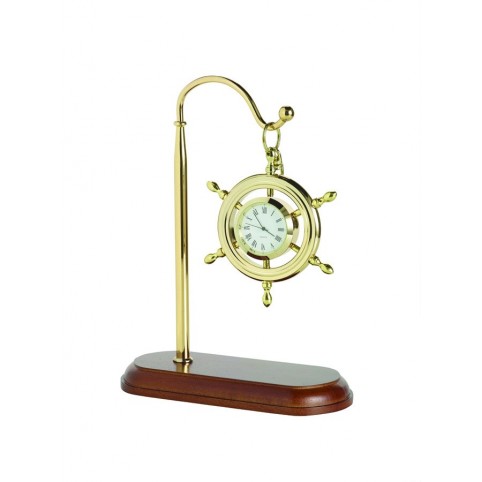
SHIP WHEEL CLOCK. Elegant ship wheel clock for the office in brass suspended on a wooden base. Elegant nautical object.
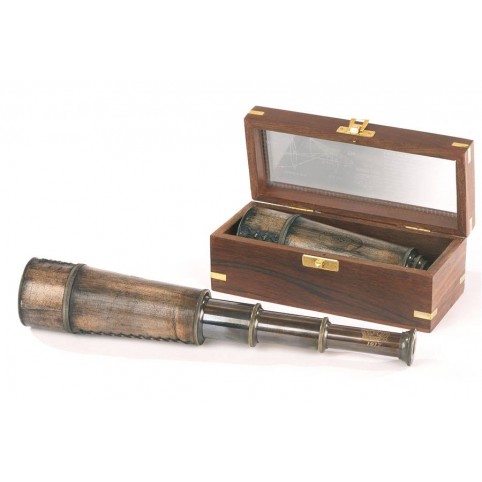
The telescope appeared between the 16th and 17th centuries in the Netherlands. Its development is credited to Hans Lippershey and in its early stages was mainly used by sailors and naturalists. Reproduction leather-bound, four-tube telescope in antiqued brass. Comes with an acacia wood box decorated with brass inlays.

Replacement for the glass of the tide indicator model PM2000
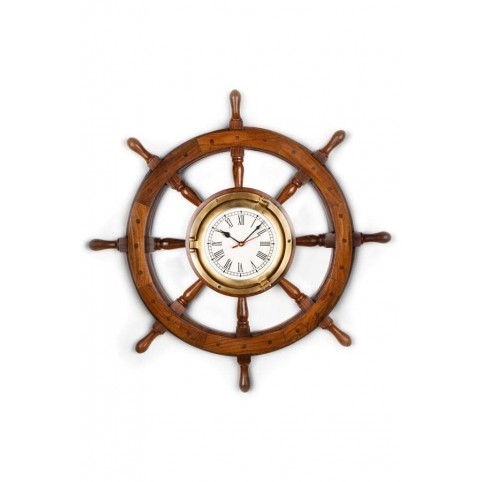
Decoration 8-spoke ship's wheel with clock. Rosewood with 3-hand clock in brass.
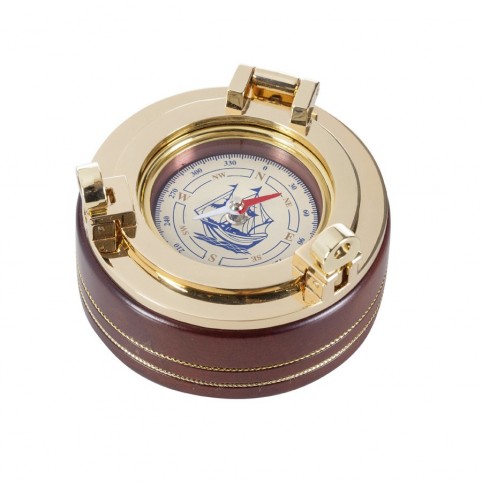
Brass porthole compass with wooden base.
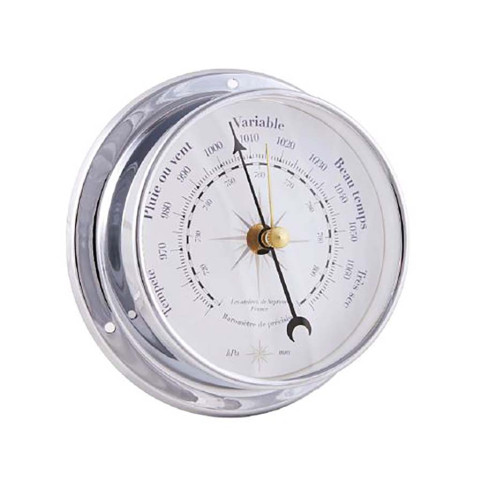
IMEX Marine barometer, a great benchmark in quality measurement devices. This elegant IMEX Marine barometer analyses pressure variations allowing it to predict the weather. Made with brass plated metal. Made in Spain. Guaranteed 1 year. 14.5x4x14.5 cm.